September 16, 2026 Post by : Editorial Book Reviews
Desert Solitaire and Beyond: Writing from the Arid West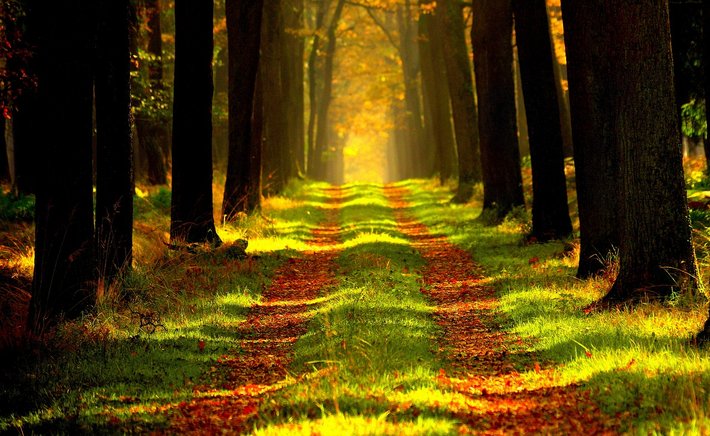
There's a persistent idea that nature writing is quiet, plotless, and best consumed in small doses before bed. But some of the most gripping books in the genre read like novels, complete with tension, character arcs, and stakes that feel personal even when the protagonist is a forest, a watershed, or a single old-growth tree.
Take Richard Powers's The Overstory, which is technically fiction but functions as a kind of ecological epic. Its human characters are memorable, but the book's real subject is the chestnut, the redwood, the banyan—trees that operate on timescales we can barely imagine. Powers isn't writing nature writing in the traditional sense, but he's using the tools of fiction to make us feel the weight of arboreal time. The result is a book that changes how you walk past a tree.
Or consider The Wild Trees by Richard Preston, a work of narrative nonfiction about the people who climb California's giant redwoods. Preston structures it like an adventure story because it is one: researchers dangling hundreds of feet above the forest floor, discovering entire ecosystems in the canopy that no one had documented before. The trees are the setting, but the humans—obsessive, brave, sometimes reckless—give the book its pulse.
Ecology as Plot
The best of these books understand that ecological processes are inherently dramatic. A river changing course, a wolf pack reestablishing territory, a fungus network moving nutrients through a forest floor—these are stories with causes and consequences. The challenge for writers is translating those processes into human-scale narrative without reducing them to metaphor.
One writer who does this beautifully is Barry Lopez. In Arctic Dreams, he moves between natural history, personal experience, and cultural reflection, building a portrait of a landscape that feels as alive as any character. The book has no conventional plot, but it has momentum. You keep reading because you want to know what the Arctic will reveal next.
Another is Ellen Meloy, whose The Anthropology of Turquoise wanders through desert landscapes with a novelist's eye for detail and a poet's ear for rhythm. Meloy's deserts are not empty; they're crowded with color, history, and strange human characters. Her books are funny, sharp, and deeply informed, and they demonstrate that nature writing doesn't have to be solemn to be serious.
Why Story Matters for Conservation
There's a practical reason to celebrate this narrative turn. People protect what they love, and they tend to love what they can imagine. A scientific report on biodiversity loss, however accurate, rarely moves anyone to action. But a story about a specific place, with specific creatures and specific people, can lodge itself in your chest and stay there.
That's what these books do. They make the abstract concrete. They turn ecosystems into places you can miss. If you've been avoiding nature writing because you assumed it was dry or formless, start with one of the narrative-driven titles here. You may find that the forest has been waiting to tell you a story all along.


Author

22 feb,2025
This incident opened my eyes to the value of Insurance in general, so I decided to examine my personal and business insurance.



Comment (3)
The payments are made directly from one person to another without passing through a central bank or clearing house.
22 feb,2025
ReplyThe Art of Paying Attention: Why Nature Writing Rewires How We See
23 feb,2025
ReplyBeyond the Charismatic Megafauna: Finding Stories in Overlooked Species
23 feb,2025
Reply