September 19, 2026 Post by : Editorial Nature Writing
The Understory Speaks: Books About the Hidden Life of Forests
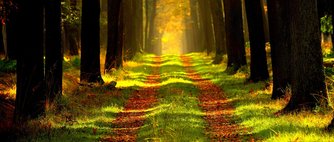
There is a particular kind of guilt that comes with sitting on a log for an hour doing nothing. No podcast, no camera, no step counter ticking toward a goal. Just the sound of wind through pine needles and the distant churr of a red squirrel. Most of us have to unlearn a lifetime of conditioning before we can tolerate that stillness, which is why the writers who do it best feel less like escapists and more like guides.
Consider the tradition that runs from Thoreau's bean field through Aldo Leopold's shack and on to contemporary writers like Annie Dillard and Helen Macdonald. What unites them isn't just an interest in the natural world but a willingness to be bored by it, to wait through the long stretches where nothing seems to happen until something does. Dillard's Pilgrim at Tinker Creek is essentially a book about staring, and it earned her a Pulitzer partly because she made staring feel urgent.
This is harder than it sounds. Watching requires a surrender of narrative control. When you sit still, you don't get to decide what shows up. A heron might land, or nothing might happen for forty minutes, or a wasp might decide your knee is interesting. The writers worth reading are the ones who don't edit out the nothing. They let the tedium accumulate until it transforms into attention.
Why the Slow Gaze Matters Now
We live in an era of what the writer Jenny Odell calls the attention economy, where every quiet moment is a revenue opportunity waiting to be filled. Nature writing offers a counterpractice. It says: the heron does not care about your inbox. The tide will not refresh. There is something almost subversive about choosing to watch a spider repair a web when you could be optimizing something.
Books in this vein don't ask you to move to a cabin. They ask you to reconsider what counts as an event. Leopold's A Sand County Almanac spends pages on the tracks of a skunk in January snow. Macdonald's H Is for Hawk dwells on the tedium of training a goshawk, and in that tedium finds grief, patience, and a strange kind of love. These are not dramatic books. They are books that teach you how to be present, which is harder than it sounds and more rewarding than it looks.
Where to Start
If you're new to this slower register, begin with Dillard, but don't feel obligated to finish her in one sitting. Read a chapter, then go outside and try to notice one thing for ten minutes. You'll likely find that your mind rebels, then settles, then begins to see. That settling is the whole point.
For something more narrative, try Craig Childs's The Animal Dialogues, which combines close observation with a storyteller's instinct. Or pick up a used copy of The Outermost House by Henry Beston, a book written from a single dune on Cape Cod, where the author spent a year watching the sea and seasons. Beston's prose is old-fashioned but his premise is radical: that a year of watching is not a year wasted.
What these books share is a refusal to treat the natural world as backdrop. They insist that the living world is the main event, and that our attention is the only currency that matters. Sitting still, it turns out, is not passive. It's a practice, and like any practice, it changes you.
Author
22 feb,2025
This incident opened my eyes to the value of Insurance in general, so I decided to examine my personal and business insurance.
Comment (3)
The payments are made directly from one person to another without passing through a central bank or clearing house.
22 feb,2025
ReplyThe River in the Living Room: Nature Writing for People Who Live in Cities
23 feb,2025
ReplyField Notes and Margins: The Pleasure of Reading Nature Writers' Diaries
23 feb,2025
Reply