September 10, 2026 Post by : Editorial Environmental Literature
Beyond the Charismatic Megafauna: Finding Stories in Overlooked Species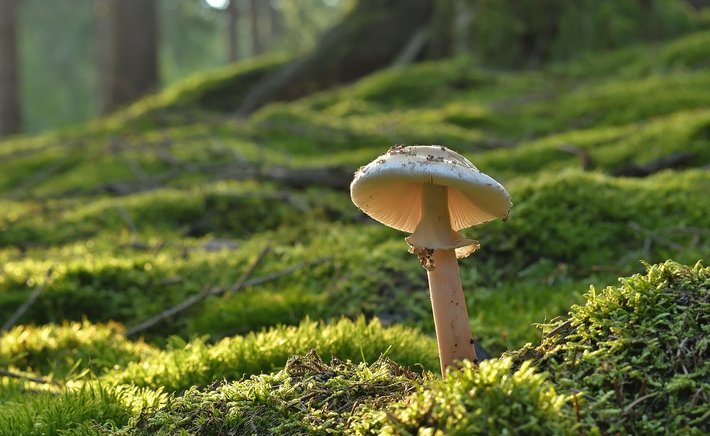
Walk into any mature forest and you're entering a conversation that started long before you arrived. Trees communicate through root systems and fungal threads. Dead wood feeds entire communities of insects, fungi, and microorganisms. The forest floor is not a carpet but a library, each layer holding centuries of accumulated knowledge.
The past decade has seen a surge of books about this hidden world, and the best of them share a willingness to challenge our assumptions about individuality, intelligence, and time. Peter Wohlleben's The Hidden Life of Trees became a surprise bestseller for good reason: it presents trees as social beings that nurture their young, share resources, and even seem to mourn. Some of Wohlleben's claims have been debated by scientists, but his central insight—that forests are communities, not collections—has reshaped how many readers see a walk in the woods.
For a more scientifically grounded take, try Entangled Life by Merlin Sheldrake. The book is about fungi, but it's also about the limits of human categories. Sheldrake shows how mycelial networks blur the line between individual and environment, and he writes with a contagious sense of wonder. You'll never look at a mushroom the same way.
Old Growth and Deep Time
Some of the most powerful forest writing focuses on ancient trees, the ones that have stood for centuries and witnessed more than we can imagine. The Golden Spruce by John Vaillant tells the true story of a unique tree on Haida Gwaii and the man who cut it down. It's a book about logging, activism, and cultural grief, and it reads like a thriller.
Then there's Finding the Mother Tree by Suzanne Simard, which combines memoir with ecology to explore how trees share resources through fungal networks. Simard's research has been influential, and her personal story—growing up in the forests of British Columbia, fighting to be taken seriously in a male-dominated field—gives the book its emotional weight.
For a more meditative approach, consider The Forest Unseen by David George Haskell. Haskell spends a year observing a single square meter of forest floor in Tennessee, and the result is a book that expands outward from that tiny plot to encompass geology, evolution, and the interconnectedness of all living things. It's a masterclass in close attention.
What the Understory Teaches Us
These books do more than educate. They reorient. They suggest that the forest is not a resource or a backdrop but a society with its own politics, its own history, its own forms of intelligence. That shift in perspective has implications for how we manage land, how we think about conservation, and how we understand our place in the natural world.
If you're new to this subgenre, start with Haskell. His book is short, accessible, and quietly radical. Then move to Sheldrake for the fungal perspective, and Simard for the science and the story. By the time you finish, you may find yourself lingering on forest trails, wondering what's happening beneath your feet.


Author
22 feb,2025
This incident opened my eyes to the value of Insurance in general, so I decided to examine my personal and business insurance.




Comment (3)
The payments are made directly from one person to another without passing through a central bank or clearing house.
22 feb,2025
ReplyReading the Anthropocene: Environmental Literature for Uncertain Times
23 feb,2025
ReplyThe River in the Living Room: Nature Writing for People Who Live in Cities
23 feb,2025
Reply